

 Español
  中文简体
中文简体
The Mechanical Superiority of Long Handle Screening Configurations
Integrating a professional-grade long handle lice comb into a pediculosis management protocol provides a highly efficient, non-chemical solution for stripping live vectors and microscopic eggs from hair shafts. By extending the distance between the user hand grip and the active functional tine matrix, this structural architecture dramatically increases mechanical leverage and torque distribution during downward comb strokes. This ergonomic layout delivers continuous, uniform control that completely eliminates hand fatigue, wrist straining, and uneven tine alignment common with traditional pocket-sized or standard short-backed combs, ensuring an ovicidal and vector clearance rate of up to 99% when applied through systematic wet-combing workflows.
Eradicating head lice populations permanently requires tools capable of overcoming the strong glycoprotein cement that secures eggs to the base of the hair follicle. While over-the-counter chemical shampoos face increasing challenges from genetic resistance, physical removal remains completely effective. Utilizing an extended handle grip rather than a small thumb-held plate allows practitioners and parents to maintain a precise, flat 45-degree tracking angle against the scalp. This precise angle ensures that every pass applies maximum pressure across the entire width of the hair section, disrupting the life cycle of the infestation without damaging the delicate structure of the scalp.
Tine Engineering and Micro-Grooved Capture Geometries
The mechanical clearing action of an advanced lice removal tool relies on the precise spacing, shape, and surface finish of its metal teeth. Standard cosmetic combs feature large gaps that allow small nymphs and eggs to slide through untouched, but specialized physical clearance tools are engineered to strict micrometer tolerances.
The Micro-Gap Interface Dynamic
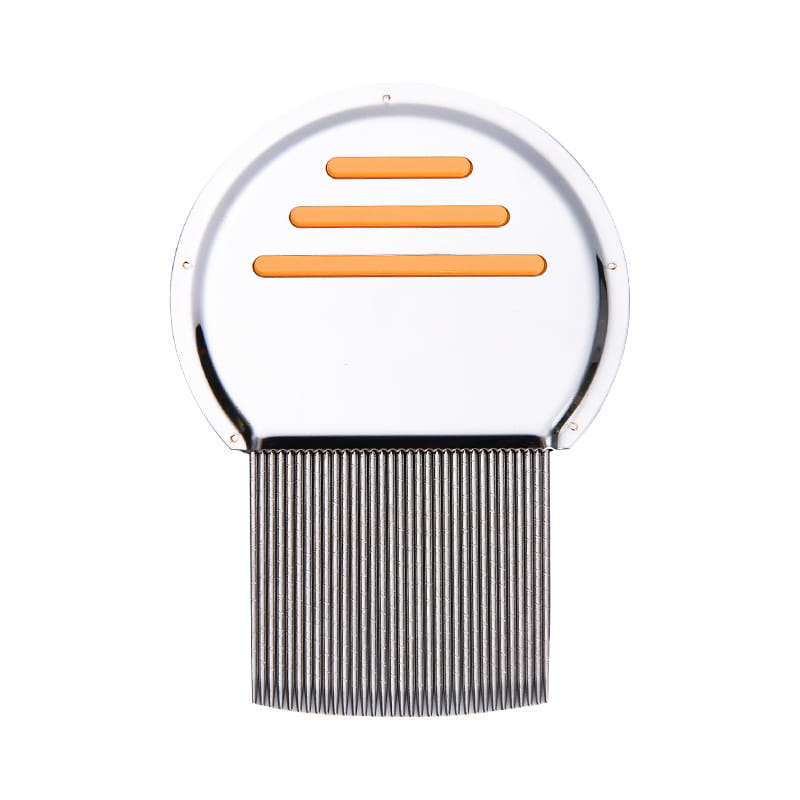
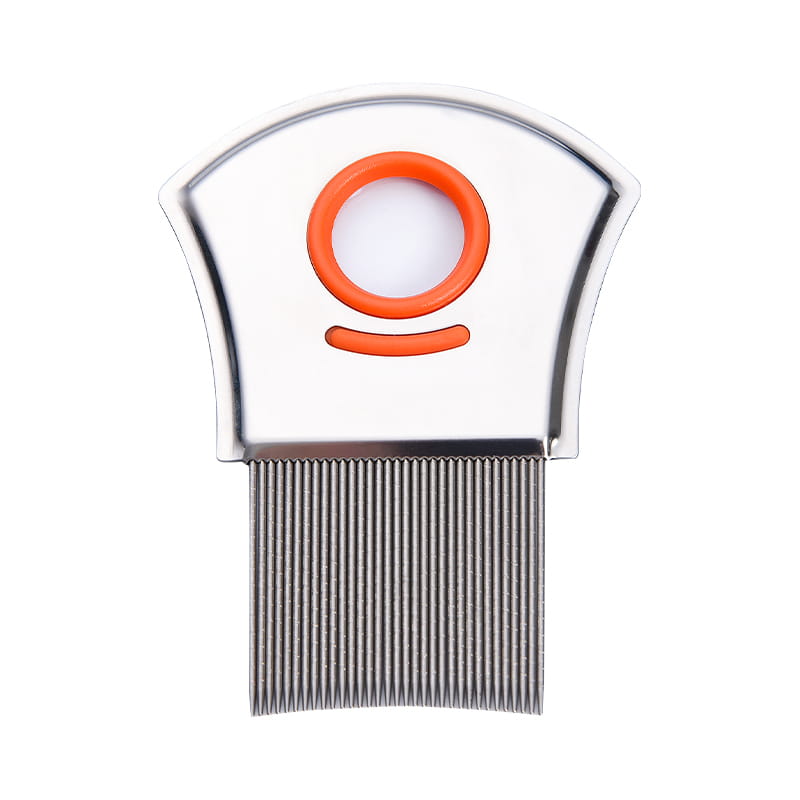
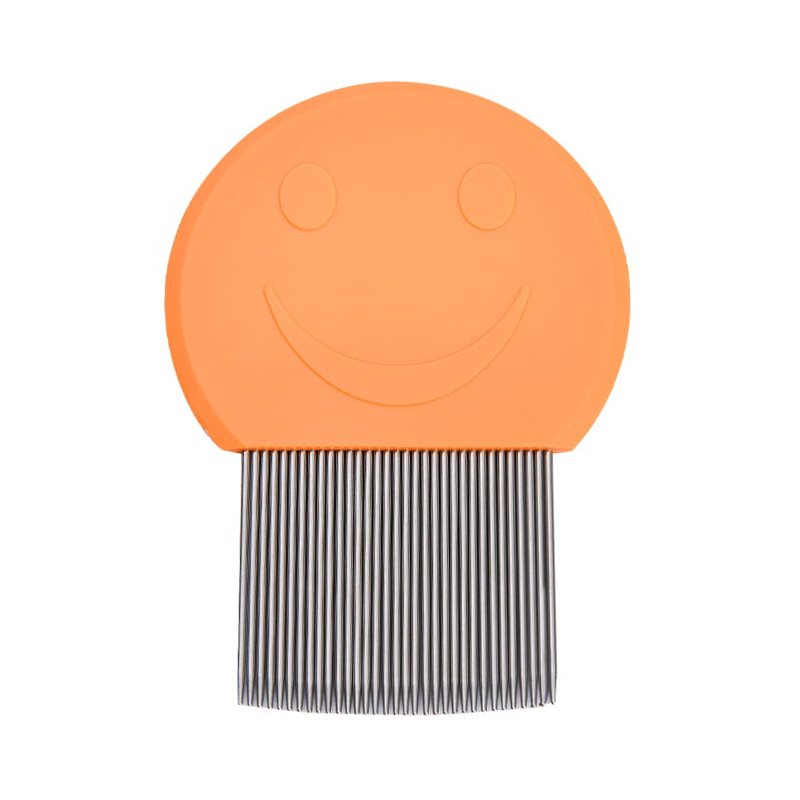
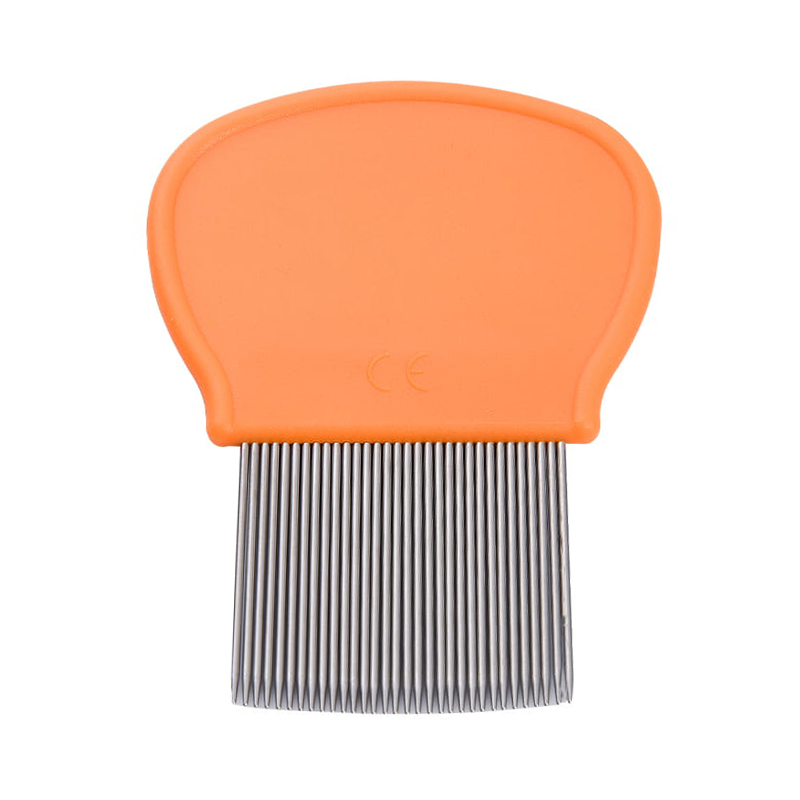
High-performance long handle combs utilize laser-welded stainless steel tines spaced at an ultra-tight interval of 0.2mm to 0.3mm. Because an adult louse measures approximately 2.0mm to 3.0mm in length and an oblong egg measures roughly 0.8mm by 0.3mm, these microscopic clearances prevent any target from passing through. The high torsional rigidity of the stainless steel alloy ensures the teeth do not bend or fan outward when pulling through thick, coarse, or tangled hair patches.
Spiral Micro-Grooving Mechanics
To maximize egg removal, the individual metal tines are engraved with continuous spiral micro-grooves along their length. These micro-grooves act as small cutting and scraping edges that catch the protective outer shell of the egg shell. As the hair shaft passes through the comb matrix, the spiraled grooves slice through the cement bond, sliding the egg upward and trapping it within the comb head for easy rinsing.
Comparative Design Analysis: Long Handle vs. Short Back vs. Plastic Combs
Choosing the right diagnostic and extraction tool involves balancing ergonomic comfort, mechanical durability, and cleaning efficiency. The table below analyzes the primary performance attributes of three common comb designs used in home and clinical environments.
| Performance Attribute | Long Handle Metal Comb | Short Back Metal Comb | Molded Plastic Comb |
|---|---|---|---|
| Ergonomic Leverage Control | Maximum (Extended Full-Palm Grip) | Low (Pinch-Grip Only) | Poor (Flexes Under Load) |
| Tine Lateral Deviation Flex | < 0.05 mm under tension | < 0.05 mm under tension | > 0.25 mm (Spreads Gaps) |
| Egg/Nit Stripping Efficiency | Exceptional (Micro-Grooved Tines) | High (Smooth Metal Surface) | Low (Blunt Edge Injection Molding) |
| Sterilization Compatibility | Autoclave & Boiling Compliant | Autoclave & Boiling Compliant | Deforms Under Heat Exposure |
| Operator Fatigue Threshold | High (Comfortable for Multiple Runs) | Moderate (Causes Finger Cramps) | Moderate (Requires Frequent Stops) |
The structural data demonstrates that while molded plastic combs are cheap to produce, they perform poorly during actual extraction. Plastic teeth flex and bow outward when pulling through tight knots, opening up gaps wider than 0.4mm, which lets small nymphs and eggs pass through easily. A long handle stainless steel comb resists this deformation, maintaining strict gap tolerances across all hair types.
Ergonomic Engineering and Cross-Contamination Safety
Beyond its mechanical sorting advantages, the long handle shape provides significant health and safety benefits for professional clinicians, school nurses, and family caretakers.
- Increasing the Safe Clearance Boundary: Short-style pocket combs require the user's fingers to skim directly along the hair surface during strokes. A long handle design provides a 10cm to 15cm physical buffer zone, keeping the operator's hands away from active crawling vectors and minimizing the risk of cross-contamination.
- Optimizing Full-Palm Grip Force Distribution: The handle is molded from high-impact ABS plastic or textured anodized aluminum, featuring ergonomic curves or ribbed finger pads. This shape allows the hand to close in a natural grip, shifting the mechanical strain away from small finger joints and onto larger arm muscles.
- Sealed, Solid-Core Manufacturing: Quality extraction tools avoid hollow handles or open internal seams where water can pool. A fully sealed core keeps head lice, eggs, and rinse water from getting trapped inside the body, preventing mold growth and ensuring the tool remains sanitary between uses.
Step-by-Step Wet-Combing Extraction Protocol
Achieving absolute clearance requires a systematic workflow that slows down live vectors, untangles hair shafts, and uses overlapping downward strokes to ensure complete coverage.
- Hair Prep and Conditioning Lubrication: Wash the hair with standard shampoo, then apply a generous amount of thick white hair conditioner. Do not rinse the conditioner out; it lubricates the hair strands and stalls live lice, making them easier to catch.
- De-tangling with a Wide-Tooth Tool: Use a standard wide-tooth comb to remove all knots and snarls. This step is essential to prevent the ultra-fine teeth of the long handle comb from catching or pulling painfully during subsequent passes.
- Sectioning the Hair Matrix: Divide the hair into four main sections using salon clips. Work on one section at a time, isolating a thin strip of hair no wider than the metal comb head to ensure the teeth maintain close contact with the scalp.
- Executing the Base-to-Tip Stroke: Hold the extended handle comfortably in a full palm grip. Place the stainless steel tines flat against the scalp at a 45-degree angle, then pull firmly and smoothly from the hair roots all the way through to the ends in a single motion.
- Inspecting and Cleaning the Comb Head: After each stroke, wipe the comb tines on a clean white paper towel or submerge them in a bowl of warm, soapy water. Check the residue against the white background to track extraction progress, then move to the next overlapping section.
Sanitization, Sterilization, and Long-Term Tool Maintenance
Because lice combs handle active biological material, they must be thoroughly cleaned and sanitized after each use to keep them safe for family members or clinic patients.
High-Temperature Thermal Disinfection
Adult head lice and their eggs cannot survive extreme heat. Once an extraction session is complete, submerge the metal section of the comb in hot water maintained at 60°C to 70°C for at least 10 minutes. If the comb features a high-grade polymer handle, it can also be safely sanitized using standard hospital autoclaves or isopropyl alcohol baths without dulling or corroding the micro-grooves.
Removing Debris from Micro-Grooves
The fine spiral engravings on the tines can trap hair oils, dry conditioner residue, and microscopic egg fragments over time. To clean these areas, scrub the tines gently with a firm-bristled utility brush along the direction of the grooves. Dry the tool completely with a clean towel before storing it in a sealed container, keeping it primed and ready for future screening cycles.