

 Español
  中文简体
中文简体
A note came home from school today: head lice were found in your child's classroom. Maybe you have already spotted a tiny tan insect moving near the scalp, or found small, tear-shaped eggs cemented to strands of hair. Whatever brought you here, the path forward is clear. The most complete head lice treatment combines a hair lice killer with a fine-toothed hair lice comb. The killer eliminates live lice, and the comb physically removes the eggs that medication often leaves behind. Choose both carefully, use them in the right order, and follow up on a fixed schedule. Here is how.
What Are Lice and Why Is a Lice Comb Non-Negotiable?
Head lice are small, wingless insects that live on the human scalp and feed on blood. Their life cycle follows a predictable pattern: eggs, called nits, are laid near the base of the hair shaft; nymphs hatch from those eggs; and adults mature within days. Nits are glued firmly to individual strands, which is why they do not wash out with ordinary shampoo and why an everyday comb cannot dislodge them.
A hair lice killer can be highly effective against live lice, but it cannot guarantee removal of every egg. Some eggs survive treatment, and a single overlooked nit can restart the entire infestation. This is why the CDC recommends using fine-toothed combs to remove both dead and living lice, and a dedicated nit comb to strip eggs from the hair shaft.
Think of the comb as the verification step that confirms the treatment actually worked. Without it, you are left guessing whether every egg has been neutralized.
Hair Lice Comb vs. Hair Lice Killer: Do You Really Need Both?
Short answer: yes. The two products do different jobs, and one does not replace the other.
A hair lice killer, typically a medicated shampoo, lotion, or mousse, is designed to kill live lice quickly and across the entire scalp. It is the most practical first strike against an active infestation. But chemical treatments have limits. Some lice populations have developed resistance to over-the-counter ingredients, and many products cannot penetrate the hard shell of an unhatched nit. Sensitive scalps can also react to the active ingredients, especially in young children.
A hair lice comb works mechanically. Its tightly spaced teeth catch moving lice, scrape eggs off individual strands, and pull out dead insects and empty egg cases after treatment. It leaves no chemical residue, is safe for everyone in the family including pregnant women and very young children, and gives immediate visual confirmation that lice are being removed.
The practical conclusion: the killer eliminates active lice, and the comb removes the eggs and verifies the result. Use them together and you attack the infestation at every stage of its life cycle. Rely on only one and you leave a gap that the next generation of lice will find.
How to Choose the Right Hair Lice Comb: Metal vs. Plastic, Fine vs. Coarse Teeth
This is where the choice of tool makes or breaks your results. As a manufacturer with a long history of professional comb production, and a monthly output of over one million combs, we have seen what separates combs that work from combs that simply feel like they work. Three details matter most: material, tooth spacing, and handle design.
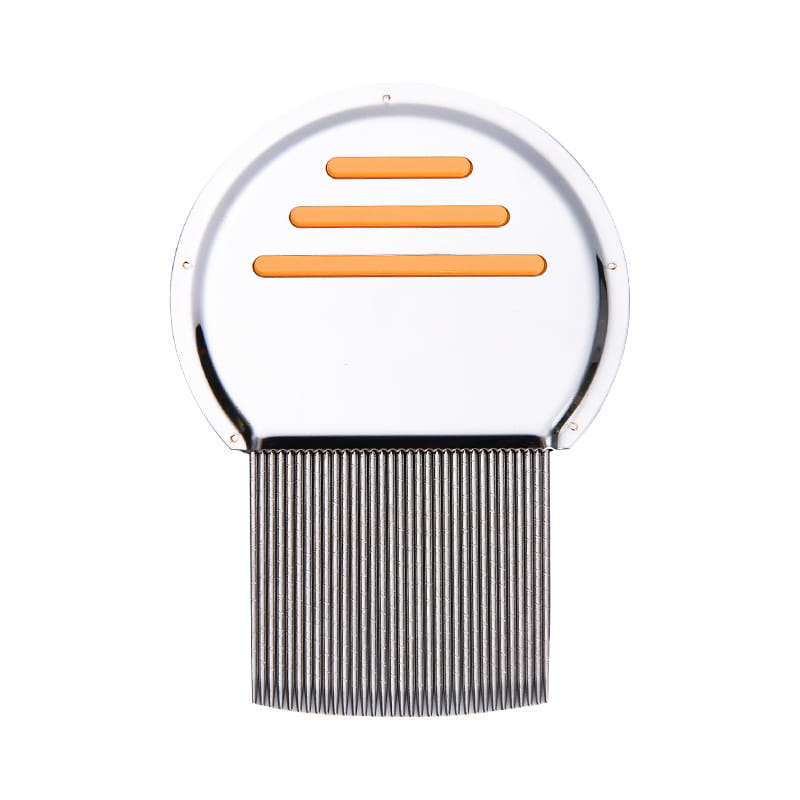
Material matters because rigidity and smoothness determine whether the teeth slide through hair cleanly and scrape eggs off firmly. Stainless steel teeth are hard and smooth, so they hold their shape, create a consistent scraping edge, and sanitize easily after every session. Plastic teeth are more flexible and less expensive, but they can bend between strands and allow eggs to slip past, especially when the infestation is heavy.
Tooth spacing is the single most important specification. A comb with widely spaced teeth is fine for detangling, but egg removal requires a dense tooth pattern. When choosing a comb for nits, look for a fine-toothed model with gaps of roughly 0.2 to 0.3 mm or less. That spacing is tight enough to catch newly hatched nymphs and scrape eggs off the hair shaft.
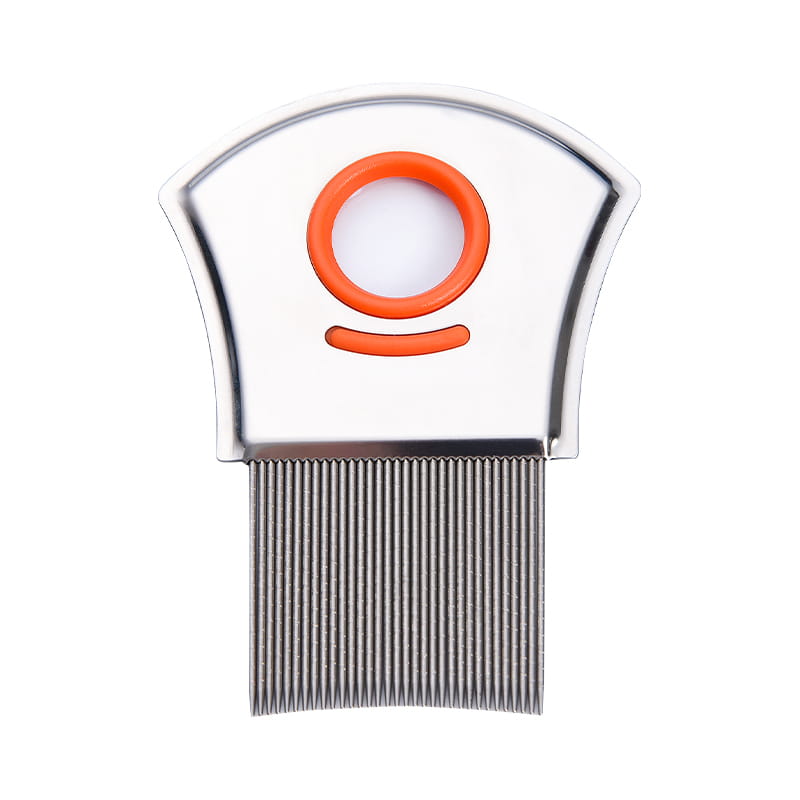
Handle design affects comfort and accuracy, especially when you are working on a child who will not sit still. A long handle gives you a better view of the crown and the back of the head, where eggs are easiest to miss. A magnifying lens built into the head of the comb helps you spot transparent eggs near the hairline and behind the ears. A fine-toothed lice comb with a magnifying glass for checking the hairline is a practical choice for a first thorough sweep.
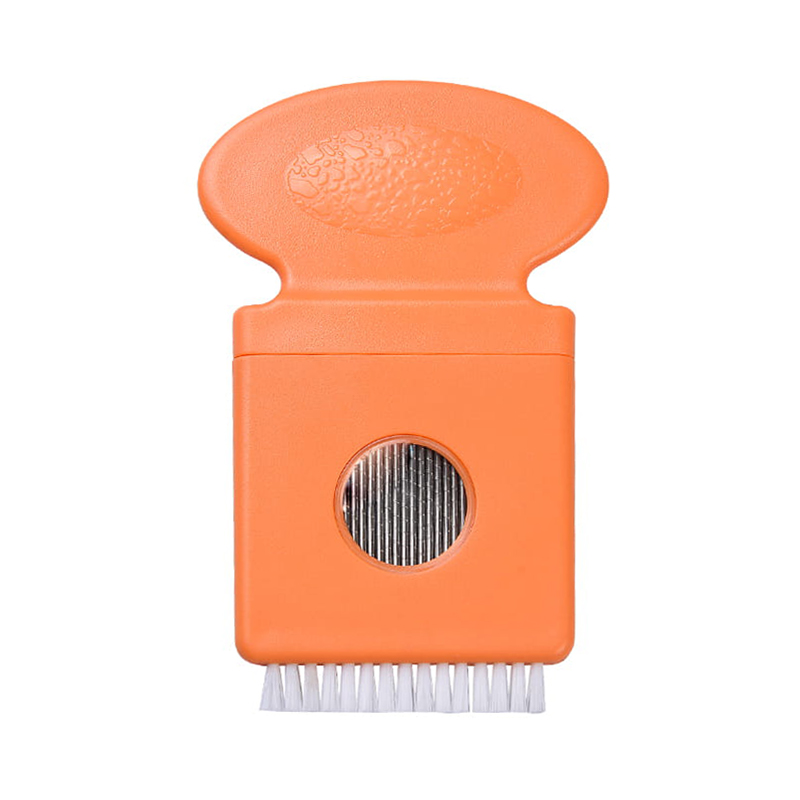
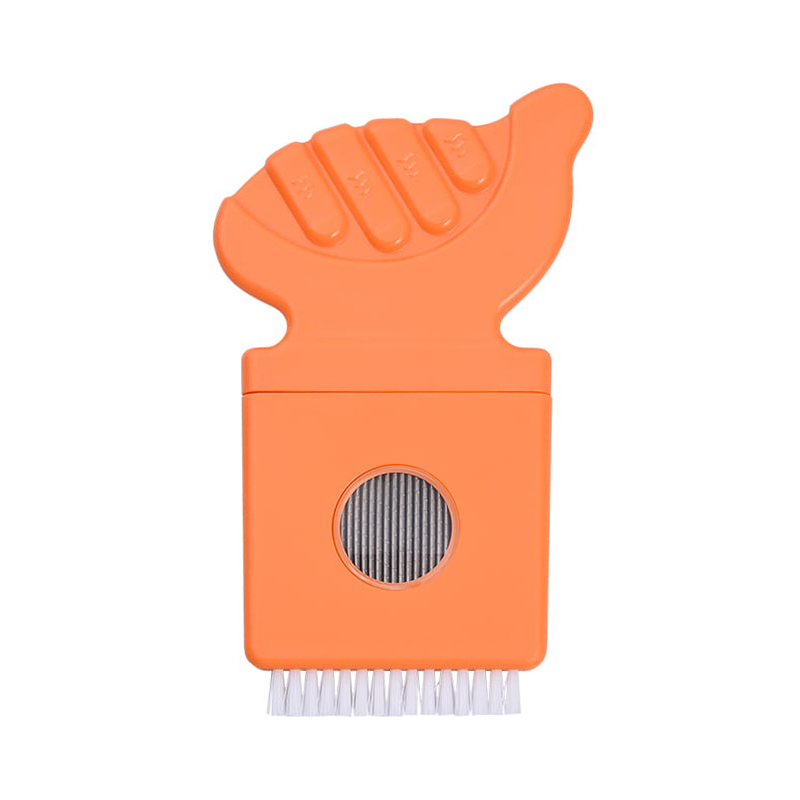
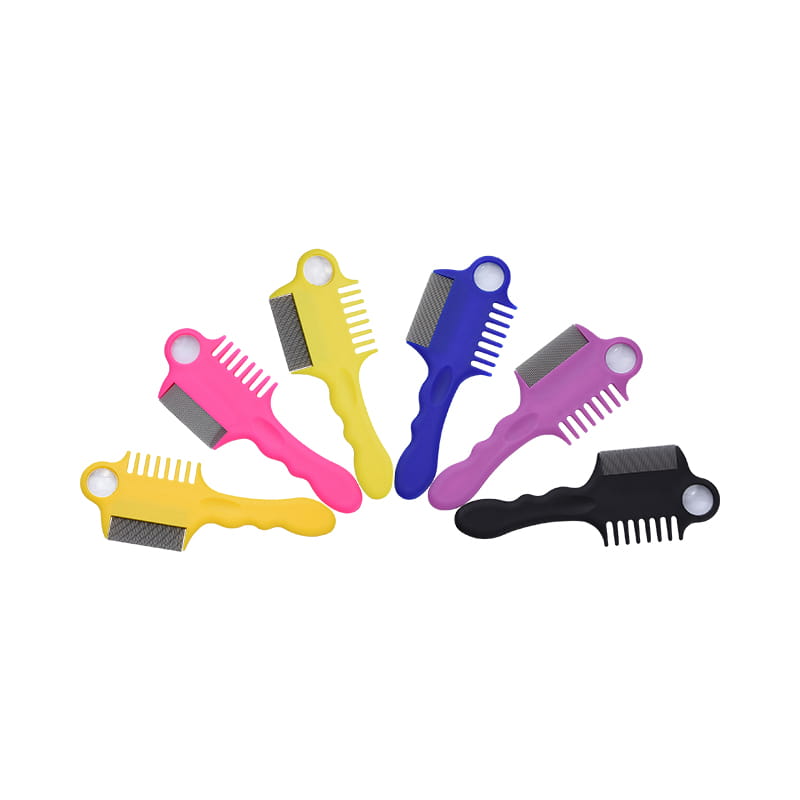 Wholesale 141mm length and 15.3g Long Handle Lice Comb Manufacturers, OEM/ODM faYuyao safe & Beauty Lice Comb Factory is wholesale of China 141mm length and 15.3g Long Handle Lice Comb manufacturers and OEM/ODM factor...View Product →
Needle tip finish matters as well. Rounded, finely polished tips reduce scratches on a sensitive scalp, and anti-slip handles keep the comb stable in wet hair. If you are comparing products, inspect the tips closely: sharp or rough-edged teeth turn a necessary process into a painful one.
One more piece of guidance: skip electric lice combs. WebMD reports that electric combs lack peer-reviewed research support, and Children's Hospital of Wisconsin advises parents not to spend money on them. A manual, tightly spaced comb works without batteries and gives you direct feedback with every pass.
| Feature | Stainless steel comb | Plastic comb |
|---|---|---|
| Tooth rigidity | Firm, consistent scraping edge | Flexible, can bend between strands |
| Durability | Holds shape through repeated use and sanitizing | Prone to warping over time |
| Cleaning | Easy to disinfect in hot water or solution | May warp when exposed to high heat |
| Weight and control | Heavier, more stable in the caregiver's hand | Lightweight, can feel less precise |
| Best for | The full 14- to 21-day follow-up routine | A quick check or travel backup |
What to Look for in a Lice Comb for Babies and Toddlers
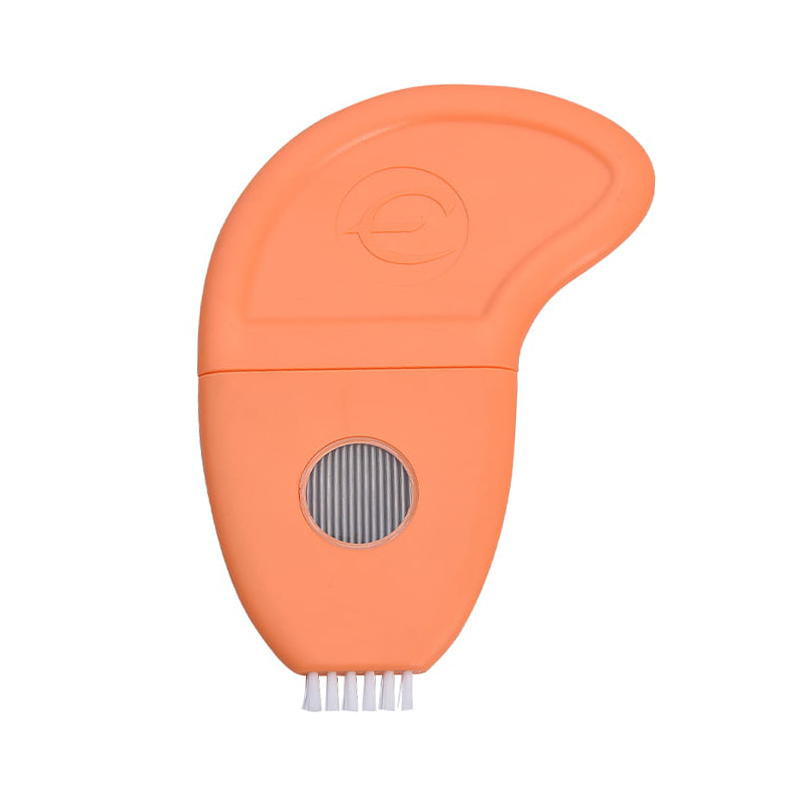
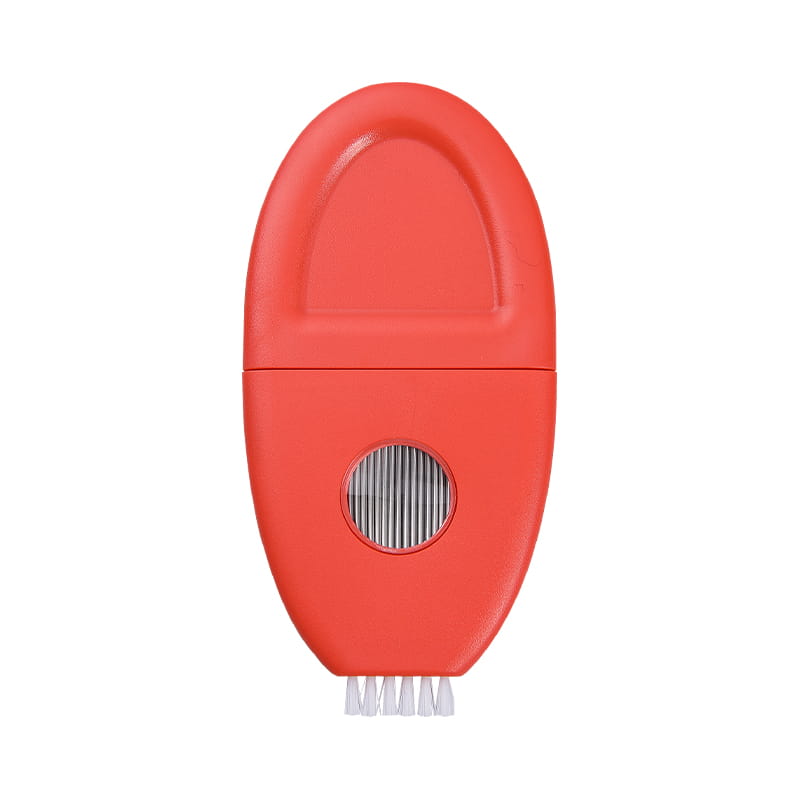
Babies and toddlers have finer, denser hair and more sensitive scalps than older children, so the same comb that suits an adult can be uncomfortable for them. Look for a small comb with finer teeth and especially smooth, rounded tips. The shorter tooth length keeps the comb close to the scalp and reduces pulling, and the smaller head makes it easier to work through fine hair without snagging. Pair the comb with a generous layer of conditioner before wet combing; the slip it creates cuts down on pain dramatically. For this age group, a painless fine-pin lice comb designed for sensitive scalps is a far more humane option than a standard adult comb.
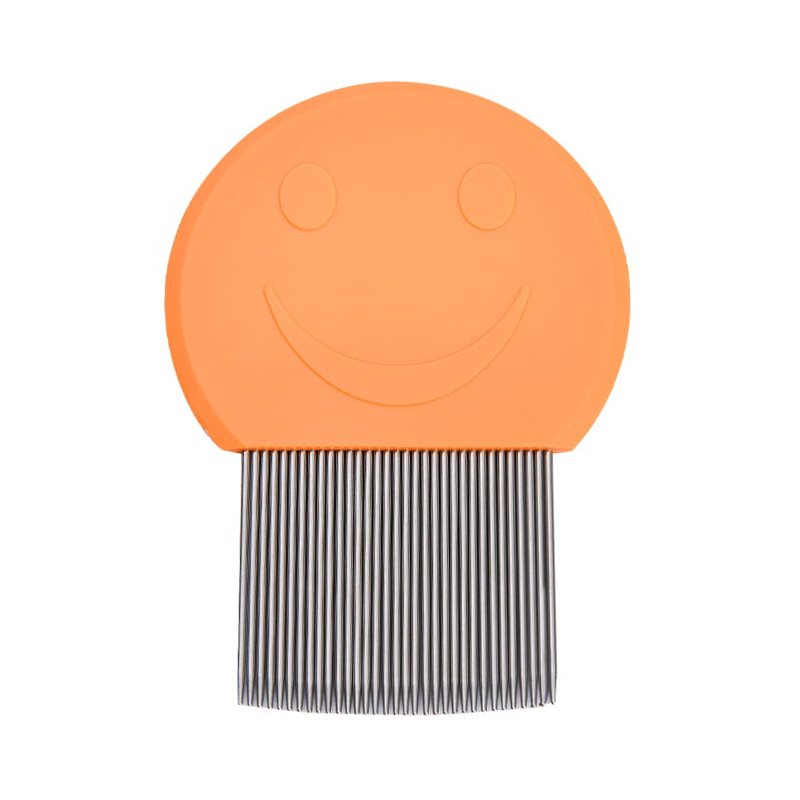
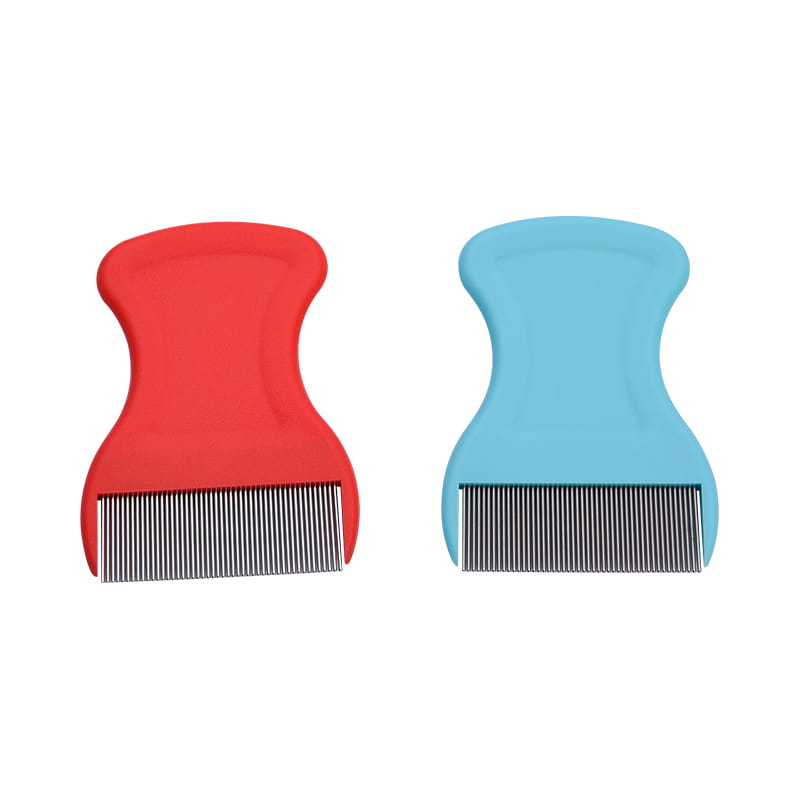 Wholesale 8.5g PP Handle Material Small Needle Lice Comb Manufacturers, OEM/ODM Yuyao safe & Beauty Lice Comb Factory is wholesale of China 8.5g PP Handle Material Small Needle Lice Comb manufacturers and OEM/ODM fact...View Product →
Step-by-Step Guide: How to Use a Lice Comb with a Lice Killer Treatment
Order and timing matter as much as the tools themselves. Follow this sequence for every treatment round:
- Detangle first. Comb the hair while it is dry using a wide-tooth comb to remove knots. A tangle-free scalp makes every later step faster and more comfortable.
- Apply the lice killer. Follow the label instructions exactly: coat the scalp thoroughly, cover all hair, and leave the product on for the required time. Do not rinse early.
- Wet comb with conditioner. Rinse out the product, apply a generous amount of conditioner, and keep the hair wet. Working in sections no wider than 2 to 3 cm, pull a fine-toothed lice comb from the root to the tip of each section. Keeping the hair wet slows the lice down, so they are easier to trap. After every pass, wipe the comb on a paper towel and inspect it for lice and eggs.
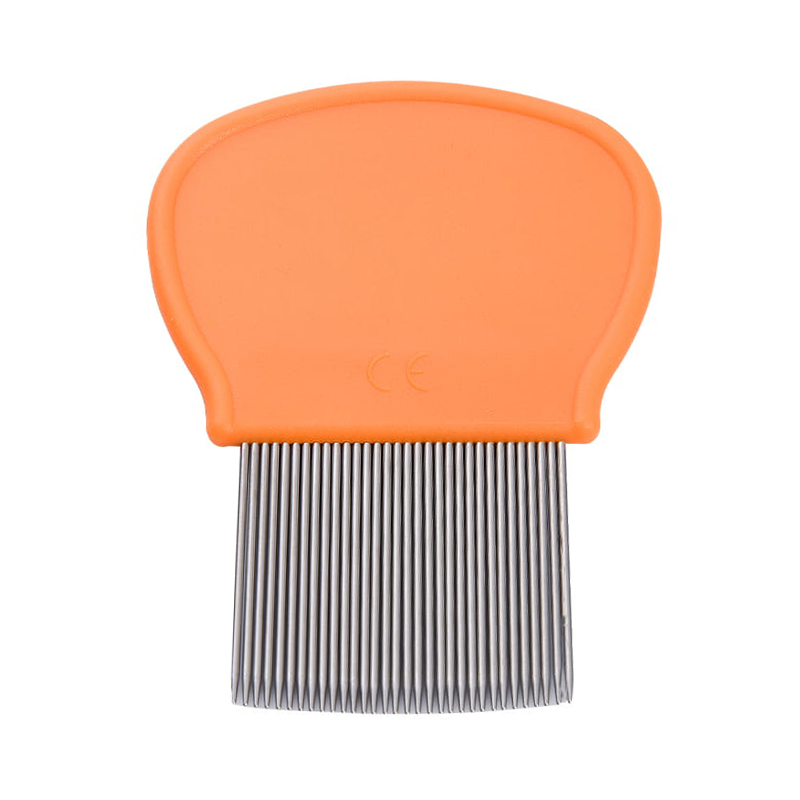
- Clean and sanitize the comb. Lice and eggs can survive on the tool itself. Soak the comb in hot water above 60°C (140°F) or in a disinfectant solution for at least 10 minutes before using it on anyone else. A tough stainless steel louse comb built for repeated use and easy sanitizing
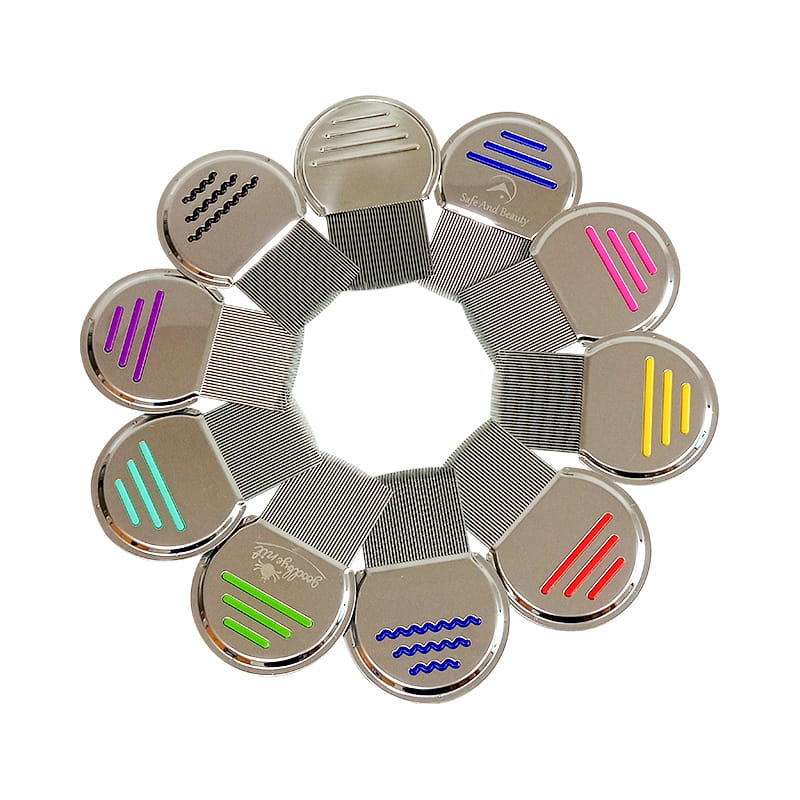 Wholesale 0.08mm-0.1mm needle internal distance stainless steel louse comb ManufYuyao safe & Beauty Lice Comb Factory is wholesale of China 0.08mm-0.1mm needle internal distance stainless steel louse comb manufacturer...View Product → handles this routine without warping or dulling.
 - Repeat on a fixed schedule. One session is rarely enough. Repeat the full combing session on days 1, 3, 7, 14, and 21 after the initial treatment, and continue until two consecutive sessions show no live lice and no freshly laid eggs.
| Day | Action | Goal |
|---|---|---|
| Day 1 | Apply lice killer, then complete a full wet combing session | Eliminate live lice and remove most eggs |
| Day 3 | Complete a full wet combing session | Catch newly hatched nymphs before they mature |
| Day 7 | Complete a full wet combing session | Intercept a second wave of hatchlings |
| Day 14 | Complete a full wet combing session | Confirm that no new eggs have been laid |
| Day 21 | Complete a final wet combing session | Verify that the infestation is fully cleared |
How to Prevent Reinfestation After Using a Lice Comb and Killer
Clearing the scalp is only half the battle. The environment around the infected person needs attention too. Lice cannot jump or fly, but they spread through direct head-to-head contact and, less often, through shared items such as hats, brushes, bedding, and headphones. Head lice are species-specific, so family pets do not carry or transmit them; there is no need to treat the dog or cat.
Wash everything that touched the head in water at 60°C (140°F) or hotter, then dry it on high heat. Items that cannot be washed, such as stuffed animals, decorative pillows, or hair accessories, should be sealed in a plastic bag for 48 hours; lice die within 24 to 48 hours away from a human host.
Check every member of the household with a fine-toothed comb, even if they have no symptoms. Notify the school or daycare so other parents can check their children, and do a quick weekly comb check for a month after the outbreak. Early detection through routine combing is the most reliable way to stop a second infestation before it starts.
When Should You See a Doctor Instead of Treating at Home?
Home treatment resolves most cases, but certain situations call for medical advice. Seek help if the scalp shows signs of infection such as redness, swelling, oozing, or tenderness, or if the child develops a fever. Also consult a doctor if you have followed the treatment schedule correctly for three weeks and still find live lice, which may indicate resistance to the product you are using.
Talk to a doctor before starting any treatment if the affected person is pregnant, nursing, or under two months old, and stop using a product immediately if you suspect an allergic reaction. As the Mayo Clinic notes, prescription options such as ivermectin and malathion are available for hard-to-treat cases, and a doctor can decide whether they are appropriate. For everyone else, the combination of a quality lice comb, a proven killer, and consistent follow-up is enough to get the job done at home.
The Bottom Line: Let the Comb and Killer Work Together
No single product removes head lice reliably on its own. A hair lice killer attacks the live insects, and a dense, well-made hair lice comb removes the eggs and confirms the result. Choose a comb with the right material, tooth spacing, and handle design; follow the five-step routine on schedule; and address the household environment at the same time. When the tools come from an experienced manufacturer that quality-tests every batch with dedicated equipment, the combined approach is as dependable as home treatment gets.